mo.co
- 4.2
- Rating
- 1.00M
- Installs
- Free
- Price

 Analysis by App-foxy
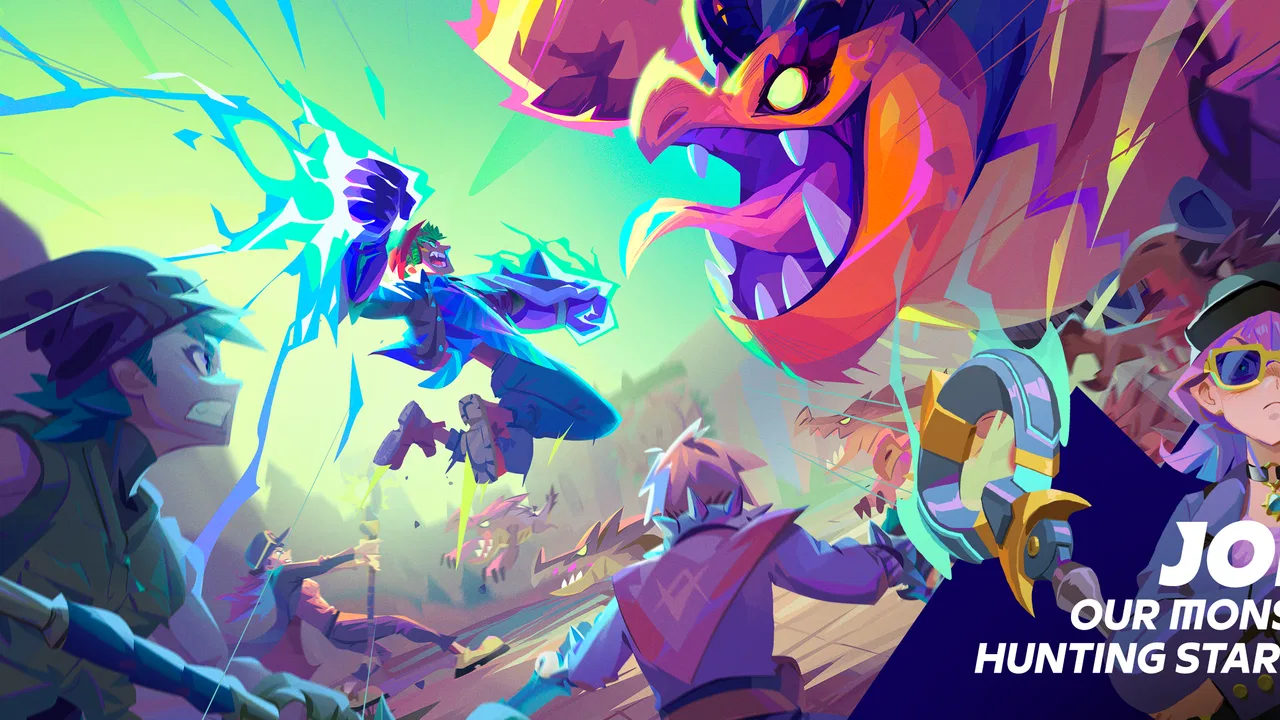
mo.co is the kind of online role-playing game I can pick up for a short session and still feel that I have made useful progress. I tested it as a mobile action RPG rather than treating it like a passive character-collection game, and that distinction matters: the fun comes from moving through encounters, choosing how to approach monsters, and coordinating with other players. It is free to play, made by Supercell, and aimed at players aged 10 and over.
The basic idea is easy to understand. You step into parallel worlds, fight monsters, improve your character, and return for another run with friends or other players. That sounds familiar on paper, but the moment-to-moment handling gives it a more active feel than many role-playing games designed around tapping through menus. I enjoyed it most when I stopped trying to rush every encounter and started treating each run as a small routine: check my setup, enter with a clear goal, learn the enemy patterns, and adjust before the next attempt.
How a normal mo.co session actually works
I look at a normal mo.co session as a sequence of small choices, not just a quick dive into combat: I decide what I want to practice, check that my setup feels comfortable, and then see whether the encounter suits the time and attention I have. That routine also makes it easier to notice when the game’s pace or presentation is not working for me, which leads into a closer look at readability and navigation.
You May Also Like

 Blood Strike: 2.5 Anniversary
Blood Strike’s Loadouts Turn Every Drop Into a Tactical Gamble
A close look at Blood Strike’s custom loadouts: how fast access to signature weapons reshapes its battle royale rhythm, rewards preparation, and narrows the gap between fights.

 Pandora - Music & Podcasts
Pandora’s Music Is Easy to Start, but Harder to Recover
Pandora’s strength is its low-effort path from a seed to a station. Its weak spot is how much confidence it asks you to place in connection, setup, and quiet recovery.

 8 Ball Pool
 Is Built on Rivalries, Rematches, and Routine
A close look at the rivalries, rematches, shared routines, and unanswered safety questions that turn a quick pool match into a persistent mobile community.

 Samsung Music
’s Quiet Strength Is Playing What You Already Own
Its reach comes less from spectacle than from dependable access to a personal library. That simplicity is both the app’s strongest retention engine and its ceiling.

 AccuWeather: Weather Radar
AccuWeather Review: A Quick, Clear Forecast for Everyday Decisions
For everyday plans, the best forecast is the one you can understand quickly. AccuWeather makes rain timing, radar, and local conditions easy to act on, with a few trade-offs.

 Hill Climb Racing
Why Hill Climb Racing Still Turns Crashes Into One More Run
A tiny car, a bumpy hill and one more upgrade: Hill Climb Racing keeps resurfacing because its simple chaos makes every near-miss feel personal.
More From Our News Desk



A simple loop that suits short play sessions
My usual workflow begins before entering a world. I look at what I am currently trying to improve, decide whether I want a relaxed run or a more demanding fight, and then choose equipment that supports that intention. This small pause prevents the common mobile-game habit of launching into content without thinking about the build. When I did that, victories felt less consistent and failures were harder to understand.
Once inside, the game asks for active attention. Movement, positioning, attacks, and reactions all matter more than they would in a purely automated RPG. I found that staying near danger simply because an attack was available was usually worse than waiting for a safer opening. That makes even familiar encounters useful practice, because the goal is not only to deal damage but also to avoid wasting health and recovery opportunities.
The multiplayer side changes the rhythm. Playing with friends makes difficult encounters feel less like a test of one perfect build and more like a series of small decisions made together. One player can draw attention, another can keep pressure on a target, and everyone benefits when the group avoids turning a manageable fight into a chaotic one. I would not describe this as a game that requires constant voice chat, but communication becomes valuable when the team is learning a new encounter rather than simply repeating an easy one.
A realistic everyday use case is a short evening break after work or school. I can complete a focused run, notice one weakness in my setup, and stop without feeling forced to spend an entire night. On a longer weekend session, the same structure supports experimentation: I can try a different approach, compare how it handles a difficult monster, and then return to the safer setup if the experiment is not paying off.
What to prepare before joining other players
I recommend doing at least one comfortable solo or low-pressure run before inviting friends into unfamiliar content. This is not because every player must master everything alone. It is because a basic understanding of movement and attack timing makes cooperation much smoother. If I enter without knowing what my own character can safely do, I am more likely to create problems for the whole group.
Before a team session, I also decide what I want from it. If the goal is simply to explore, I choose a forgiving setup and pay attention to the world. If the goal is to clear a difficult encounter, I focus on consistency rather than novelty. That distinction is one of the most useful habits I developed while playing: use experimentation when learning, but use repeatability when clearing.
Players who enjoy traditional turn-based RPGs may need time to adjust. Those games often let me study a menu, calculate a move, and act without immediate physical pressure. mo.co is better suited to someone who wants role-playing progression combined with direct action. If I wanted a quiet, text-heavy adventure or a game that could be played almost entirely through menus, I would choose a different style of RPG.
The progression feels better when I set a narrow goal
It is tempting to treat every reward as equally important, especially early on. I had better results when I chose one practical objective for each session: improve a particular piece of equipment, learn one enemy, or become more reliable at surviving a certain type of encounter. Narrow goals made the progression easier to feel and stopped the game from becoming a blur of rewards and upgrades.
This is also where the role-playing structure helps. I am not simply repeating the same stage for a number to rise; I am making decisions about how I want to approach the next run. The strongest improvements often came from changing my behavior rather than immediately chasing a new item. Learning when to move, when to attack, and when to disengage can make an existing setup feel much stronger.
Settings and habits worth checking early
I always inspect the available controls and presentation options before settling into a longer session. On a phone, small control differences can affect whether I can react comfortably during a crowded fight. I look for a layout that keeps important actions within easy reach without forcing my thumb across the screen. The best arrangement is personal, but the key is to test it during real combat rather than judging it from a quiet menu.
I also pay attention to visual clarity. Action RPGs can become difficult to read when several effects and enemies overlap. If a setting lets me make the battlefield easier to follow, I prefer clarity over decoration. I would rather notice an incoming attack early than use a more dramatic presentation that makes movement harder to judge. This is a practical change that many new players overlook because they focus only on character power.
Sound deserves a quick check as well. I like having enough audio feedback to recognize that an action has happened, but I do not want the game to compete with conversation, music, or other tasks around me. For short sessions in public or at home, adjusting sound before starting is less distracting than changing it halfway through a fight.
Because mo.co is an online game, I also make sure my connection is sensible before beginning group content. I avoid starting a serious team run while moving between unreliable networks. A brief solo session may tolerate interruptions better than a coordinated encounter, where a delay can affect everyone. This is not a glamorous tip, but it saves frustration and helps separate a connection problem from a genuine gameplay mistake.
How experienced play becomes faster without becoming careless
My fastest improvement came from using repeatable opening habits. I enter an encounter with a plan for the first few moments instead of immediately using every available attack. I watch how the enemy moves, establish a safe position, and then commit. This reduces the number of avoidable mistakes and gives me a reliable starting point even when the rest of the fight becomes messy.
I also try to keep one familiar setup available. Constantly changing everything makes it difficult to know what caused a success or failure. A stable setup acts as a reference point. When I test something new, I can compare it with a known option rather than judging it against a different collection of changes. That is especially useful for players who enjoy experimenting but still want steady progress.
Another useful pattern is to review the final moments of a failed run instead of blaming the entire attempt. Did I take unnecessary damage while chasing a target? Did I use an action too early? Did the group split at the wrong time? These questions are more helpful than simply deciding that the character is weak. In my experience, many frustrating defeats became manageable once I corrected one repeated habit.
For group play, I prefer simple communication. A short warning about danger, a clear decision to focus on one target, or a reminder to regroup is usually more useful than constant commentary. If everyone acts independently, the team can waste opportunities and create overlapping problems. If everyone waits for perfect coordination, the run becomes slow. The practical middle ground is to communicate only the decisions that affect the next few seconds.
Players with limited time should avoid spending their whole session reorganizing. I set aside a brief preparation period, make one meaningful adjustment, and then play. The game is at its best when setup supports action rather than replacing it. If I find myself repeatedly changing choices without entering an encounter, that is a sign that I am overthinking the preparation.
Where the free-to-play model needs attention
The game can be downloaded and played for free, but it includes in-app purchases ranging from small amounts to much larger individual purchases. I consider that important before recommending it to younger players or anyone who prefers a completely fixed-cost experience. The age guidance is Everyone 10+, yet a family should still discuss spending boundaries rather than assuming the age label answers every practical question.
I personally approach the purchase options as optional conveniences rather than part of my basic routine. Setting a clear rule before playing is easier than making a decision while excited after a difficult run. Parents may want to use the device’s purchase controls and agree on expectations in advance. The question is not whether spending exists; it is whether the player can enjoy the game while keeping that spending deliberate.
This model may be less appealing to someone who wants to buy a game once and remove all ongoing purchase decisions. A premium RPG with a single upfront cost can offer a calmer relationship with progression, even if it lacks mo.co’s online action and social structure. On the other hand, players who like trying a game without paying first may appreciate the low barrier to entry, provided they are comfortable managing optional purchases.
Limits that become clearer after longer play
The active combat is a strength, but it also creates a higher demand for attention than a relaxed RPG. I cannot always play effectively while watching television, commuting through a busy place, or responding to messages. When the screen is crowded, a moment of distraction can turn a good run into a recovery problem. This is a game I enjoy more when I give it a small amount of focused time.
Online play is another practical limit. The social design is more enjoyable when other players are available and willing to cooperate. A player who strongly prefers solitary adventures may find the multiplayer emphasis less comfortable than a traditional single-player role-playing game. I can still practice and make progress on my own terms, but the experience is built around sharing the adventure rather than treating other players as an optional decoration.
Mobile controls also impose a ceiling on precision. I found them responsive enough for the game’s encounters, but a touchscreen does not offer the same physical certainty as a controller, keyboard, or mouse. Players who are especially sensitive to input accuracy may prefer a platform designed around dedicated controls. For everyone else, a stable layout and a little practice make the limitation manageable.
The game’s current version is 11.9.0, and it requires Android 10 or later. That makes checking the device’s operating system worthwhile before planning a download. The title has already reached over a million installs and carries an average rating of 4.2 from around 135 thousand ratings, with roughly 3.8 thousand written reviews. Those figures suggest a substantial audience, but they do not replace personal testing: the best fit still depends on whether direct online combat is your preferred way to play.
Who should try it, and who should skip it
I would recommend mo.co to players who want a colorful online action RPG that can work in short sessions but still rewards practice. It is especially suitable for friends who enjoy learning encounters together, comparing approaches, and improving through repeated attempts. The combination of parallel-world exploration, monster fights, and character progression gives the game a clear identity without requiring every session to become a long commitment.
I would be more cautious recommending it to someone seeking a slow, fully solo story, a turn-based system, or a purchase-once experience. It is also not my first choice for a player who wants to multitask while playing. The active battles demand enough attention that the game feels less satisfying when treated as background entertainment.
Compared with more automated role-playing games, mo.co gives me more control over the outcome of a fight. Compared with competitive action games, it places more emphasis on progression and cooperative encounters than on direct player-versus-player pressure. Compared with large, traditional RPGs, it is easier to approach in small pieces, although it does not offer the same sense of a vast single-player journey. Those trade-offs are the clearest way to understand where it belongs.
My final recommendation after building a repeatable routine
After playing through the basic loop and refining my habits, I see mo.co as a good recommendation for the right kind of mobile player rather than an automatic choice for everyone. Its best qualities appear when I prepare a sensible setup, keep my controls comfortable, focus on one improvement at a time, and cooperate instead of rushing. The game rewards attention and adaptation more than blind repetition.
I also appreciate that its weaknesses are easy to identify. The online structure, touchscreen controls, active combat, and optional purchases all ask for a certain level of commitment. None of those points ruins the experience, but they matter when deciding whether it belongs on your phone. I would not install it for a quiet, completely offline RPG session; I would install it for quick cooperative action with enough progression to make returning worthwhile.
My verdict is simple: mo.co is most enjoyable when you treat each run as practice for a better routine, not merely another reward collection. If that sounds appealing, the free entry point makes it easy to try. Give it a few focused sessions, adjust the controls before judging the combat, and decide whether the online rhythm fits the way you actually play. For me, that process turned a straightforward mobile RPG into a game with genuine room for skill, teamwork, and personal improvement.
FAQs for mo.co
01What is mo.co and what can I do with it?
Mo.co is a versatile app designed to streamline collaboration and communication within teams. It offers features such as task management, file sharing, and real-time messaging. Whether you’re managing a large project or coordinating small team activities, mo.co provides tools to enhance productivity and keep everything organized.
02Is mo.co suitable for both Android and iOS devices?
Yes, mo.co is available for both Android and iOS platforms. This ensures seamless integration across devices, allowing team members to collaborate effectively regardless of the operating system they use. You can download it from the Google Play Store or the Apple App Store.
03Does mo.co offer any security features to protect my data?
Absolutely. Mo.co prioritizes user data security by implementing encryption protocols for data transmission and storage. It also includes user authentication features to ensure only authorized personnel have access to sensitive information, providing peace of mind for users concerned about data privacy.
04Are there any costs associated with using mo.co?
Mo.co offers a free version with essential features suitable for small teams or personal use. For larger teams or businesses requiring advanced functionalities, there is a premium subscription available. This includes enhanced features such as increased storage, advanced analytics, and priority support.
05How user-friendly is the mo.co interface for beginners?
Mo.co is designed with user-friendliness in mind, featuring an intuitive interface that is easy to navigate for beginners. It includes tutorials and a help center to guide new users through the setup process and features, ensuring a smooth onboarding experience for all team members.
Pros
- User-friendly interface for easy navigation.
- High-quality video streaming with minimal lag.
- Wide range of content across genres.
- Offline download feature for on-the-go access.
- Regular updates with new content additions.
Cons
- Limited parental control options available.
- Subscription cost may be high for some users.
- Occasional bugs during content playback.
- Requires stable internet for streaming.
- Not all content available in every region.

mo.co
Gallery